On a grandfather, a farmhouse, and how distance complicates grief.
Written for The Daily Californian in November 2020, when my grandfather had just died and I was 3,000 miles away in San Francisco. Revised since. The opening is extensive on purpose — the house contextualizes the conclusion.
One of my favorite things to do growing up was visit my grandfather's farm.
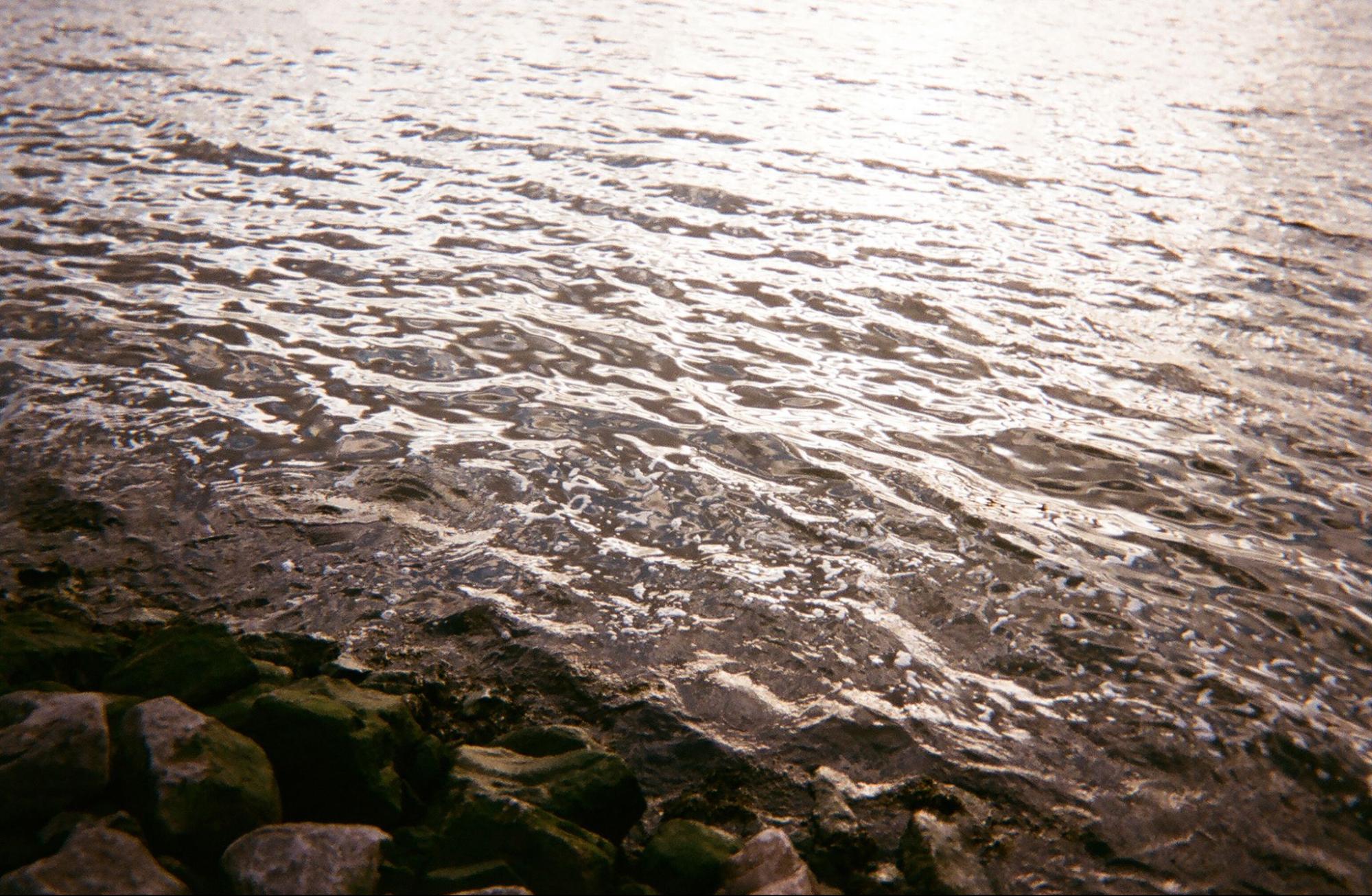
You turned off the backroad onto gravel and the house appeared immediately — no curve, no buildup, just the full picture at once. A wide teal farmhouse with a wraparound porch, built in 1900 at the very end of the Victorian era, sitting at the base of a hill with the Blue Ridge Mountains rolling gracefully in the distance. American Four Square, they call the style — practical bones, generous proportions, a work of craftsmanship that was built to last and knew it. To the left was flat green land going nowhere in particular. To the right was a dense wall of trees, and somewhere behind them, water — though you couldn't tell until you got closer and the tree line thinned enough to show the creek running alongside the whole driveway, rocky and fast and cold even in summer.
Somewhere near the entrance, a motion sensor sent a chime through the house. By the time you reached the door, he was already outside. He lived alone out there, a simple life built around sports and land and the particular contentment of a man who had decided what he wanted and built it. He was always standing out front when we pulled in. Always.
As I slid open the van door, our Labrador Retriever, Kaleah, would push her way out onto the gravel before anyone else had a chance to move — her untrimmed nails clinking against the stones, already angling toward the tree line. She knew the creek was back there, and she set out on a mission.
Ten feet from the house you could hear it. That rushing sound that meant cold water over rocks, which meant wading in up to your shins on a July afternoon, which meant everything slowing down in the specific way that only happens when you are young and outside and have nowhere to be. I spent whole summers in that creek. There was a spot upstream deep enough to swim, and we'd wade up to it in the heat, the water getting colder as it got deeper, the rocks mossy and uncertain underfoot.
Once, wading near the bank, a water snake cut across the surface directly in front of me. I have been afraid of snakes my entire life, but that was the first time fear made me completely still — not running, not yelling, just frozen, watching it move past. I stayed out of the water after that. Mostly.
The house revealed itself in layers. The wraparound porch stretched from the back around to the front, where his dog slept in the afternoons. Inside, heart pine floors ran through every room, warm and amber-toned in the afternoon light — the same floors that had been walked on for over a hundred years. There was a grand wooden staircase in the main entrance hall, a library that doubled as his office with built-in shelves floor to ceiling, a stone fireplace in the den, a kitchen big enough to hold everyone at once. Out back, a hunting cabin that smelled like old wood. And up in the attic — no air conditioning, always stuffy, always inexplicably hot even when the rest of the house was cool — an entire room converted into a toy room. Shelves packed so densely that I would discover something new every single visit. I don't know where all of it came from. I never thought to ask.
He hunted quail on that land. I remember eating it and thinking I had never tasted anything so particular to a place. The kind of taste that could evoke a lost memory.
When I was around eight, my mother got married. The wedding was at my grandfather's house — about two hundred people in that yard, the mountain behind them, the creek somewhere just out of sight catching the late afternoon light. That is how much space that place held, and along with that space, loads of memories.
When I was twelve, he was diagnosed with dementia. A few years later, he had lost almost all of his memories, including those of me, my mother, and of the farm. He fought back. It didn't matter.
Then I moved to San Francisco, and the visits stopped. I left him behind, along with my pets, parents, sisters, and everything else I had known.
One day during my senior year of high school, I was walking into fourth period when my phone started vibrating. My mother was calling. She had news I had long been anticipating: Kaleah was dying. She had been suffering from tracheal paralysis, and at seven that evening, the veterinarians would come to put her down.
Even knowing it was coming, the news hit me like a trainwreck. My mom offered to FaceTime me while it happened. I said no. If I couldn't be there in person, I didn't want to watch through a screen.
Later that day, I was at work filing papers. I watched the clock hit 7 p.m. I held myself together. All I could think about was that it was happening right now, 3,000 miles away, and there was nothing I could do about it.
She was gone.
Later that night, I walked up to Twin Peaks and let the emotions out. I needed a moment alone. I wanted to be with my family, and I wasn't.
A few weeks later, my phone vibrated again. FaceTime. My mother. When I picked up, she told me my grandfather was nearing the end of his battle with dementia. She had called so I could say goodbye.
"You haven't seen him in a long time, so this might be a bit shocking," she warned.
As she turned the camera toward him, I was met with an image that has stuck with me since. He looked emaciated, almost unrecognizable.
I searched for the right words. I couldn't find them.
I said goodbye, hung up, and cried.
A couple of days later, I boarded a flight back to Virginia. The distance was making everything harder, so I broke it. I just wanted to be with my family.
Physical separation makes grief stranger. When you are conscious of someone's final moments, distance becomes suffocating. Then comes the guilt. Should I be there? Am I too late? Do they know I love them? Why didn't I show it more when I had the chance?
Needless to say, my family and I needed closure. Paying the farm one last visit would bring us full circle. We sat next to the creek where Kaleah used to run ahead of us and brought painted rocks to toss into the water with our final goodbyes.
Ten years earlier, I had stood on the same soil for my mother's wedding, watching two hundred people fill the yard my grandfather had built his life around. Ten years earlier, he remembered my name. Ten years earlier, this was home.
It is a strange feeling to stand on ground that was once yours and now belongs to someone else. The farm was once family to me. Now it felt like reconnecting with an estranged relative.
I tossed my dark green rock into the clear water, finally landing on the words I hadn't been able to find in his last moments:
Papa, I miss you. Thank you for caring about me.